The Ella Baker Center is launching a new program this fall: Healing Through Action (HTA) is a twelve-week program that seeks to empower community members through advocacy and healing sessions.
HTA is a unique social justice initiative that will combine political education with community-based approaches to healing. In the program’s pilot phase, the first cohort will be made of families connected to the Ella Baker Center who have been impacted by incarceration and state violence.
As they geared up for the pilot program’s launch in late August, EBC’s Senior Organizer and Advocates, Angelo Sandoval and Monifa (Nifa) Akosua, and Barbara Doss, the woman whose advocacy and ideas inspired the program, spoke to EBC Communications Intern Julia Shimizu about the need for and the importance of HTA.
This conversation has been edited for clarity.
Julia: What is the central idea of Healing Through Action?
Monifa: The idea around Healing Through Action is to create a space for families to heal, but also get the political education skills to advocate. One thing we noticed is that healing and advocacy are seen separately in the community, so we wanted to create a space where healing and advocacy come together. They can’t exist without each other. And the more we create the space for families to be seen and heard, and then get the skills so they can advocate, this is how we create a community that will thrive.
Julia: Where did the idea for Healing Through Action come from?
Monifa: The idea came from Miss Barbara — Mama Barbara, I call her. She was advocating for her son, Dujuan Armstrong (Dujuan was killed by Alameda County sheriff deputies while incarcerated inside Santa Rita jail in 2018 ). I just saw this powerful woman demanding answers about her son and asking who is responsible for his death. It’s powerful, but it’s heart-wrenching at the same time. It was my first time being in action with EBC and my first time meeting Miss Barbara. I just hugged her. I just grabbed her and I just hugged her. After that I ended up inviting her to a retreat in Oakland for other families who lost their children to police brutality and gang violence. I invited her because I thought she could benefit from other people who know what she was going through. From that retreat with Miss Barbara came the idea for Healing Through Action. Just seeing her, hearing her story, and wanting to provide some type of resource for her heart, literally. So, I thought, we should advocate and get people out there in the community and build power with them, but we should also be holding space for them to heal.
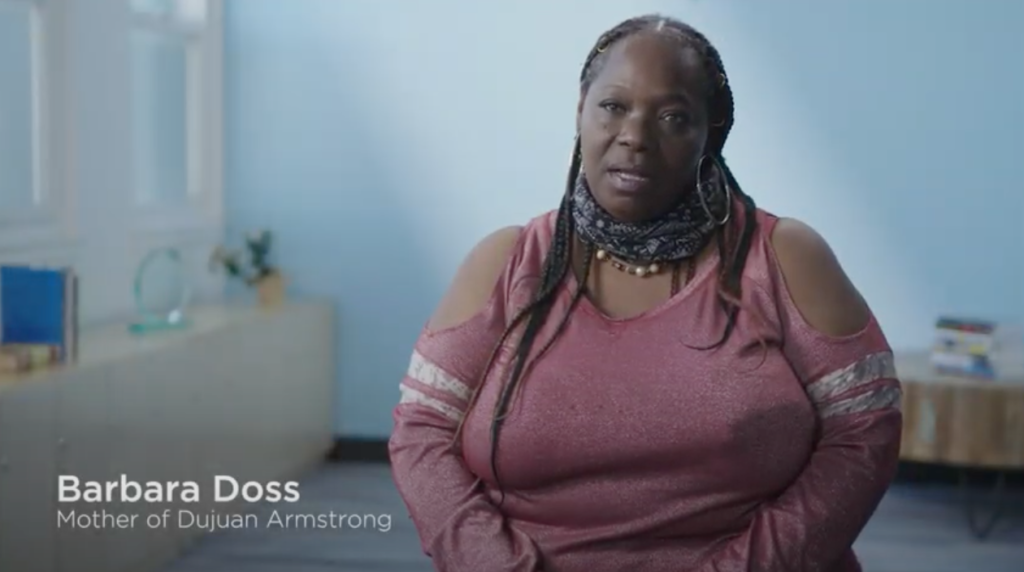
Barbara: I am really excited about the program because I am going to be able to get other people to feel better, to get out there. I want them to feel, “Hey, I want to get out there like what Barbara’s saying. I’m going to protest. I’m going to march, I want to put my baby’s name out there. I’m going to keep his legacy up.” And I want to be able to help somebody else, just guide them in a different direction, for them to uplift themselves.
Julia: You mentioned people affected by police violence and state violence. Who will participate in the program?
Monifa: This is the pilot program, but the program will be organized in cohorts. The pilot is just just focused on the families from Alameda County because that’s where we are. We’re connecting with the people we’ve already been in contact with through EBC’s work –– families impacted by the loss of their loved ones through incarceration.
Julia: Do you feel like your personal experience or identity has shaped the way you perceive advocacy, especially the type of advocacy you want to push with this program?
Monifa: We have to rest. We have to love ourselves. We have to take that time. We have to dance, eat, and commune with each other. We have the image. I think that joy and rest is a part of liberation. That is it. We can’t just sit here and focus on fighting all the time, and not being strong. I’m so over calling a Black woman strong like, “Oh, you are a strong Black woman.” “No, I don’t want you to call me none of those things because I’m not strong. I’m actually vulnerable. I actually have a lot of compassion. But also, I want to rest. I also want to have fun. I want to enjoy life.”
Barbara: I feel that this program would really help us. Like Nifa was talking about, saying how to be a woman and be a strong Black woman. I feel the same way she feels because, to me, I don’t know where I would have been without the Ella Baker Center. I just took off with it. When I met them, that was my strength. So I want to be able to be somebody else’s strength.
Julia: Can you also share what motivated EBC to provide a stipend for the families participating in the program?
Angelo: We’re not just like, “Hey, come hang out with us for free on your Saturdays.” We’re centering the idea that we want to engage in deep relationships and not exploit or extract from them.
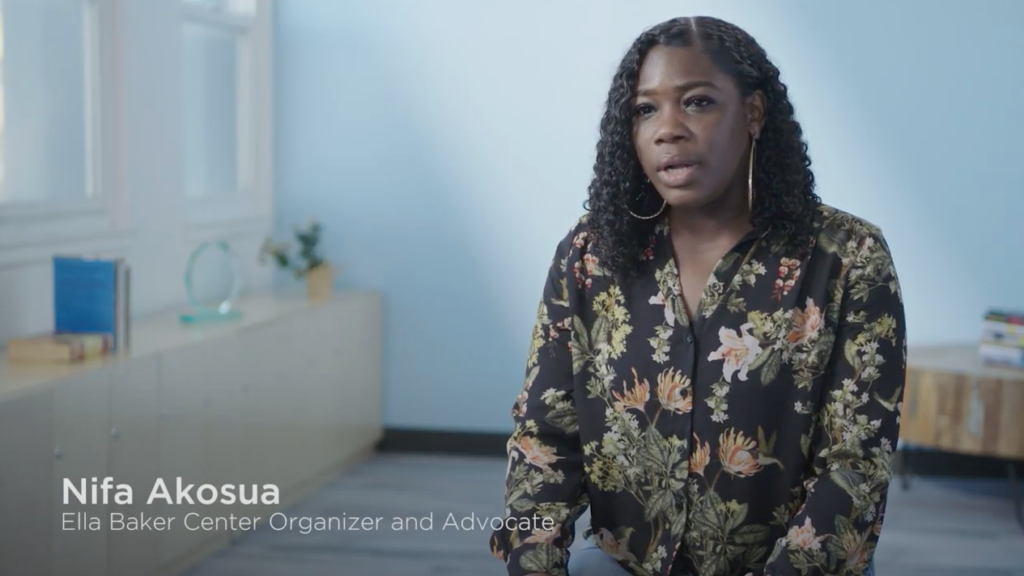
Monifa: That goes back to building transformative relationships over transactional relationships. That’s the top thing because, in the nonprofit world, transactional relationships happen a lot. It’s easier to display people’s stories and narratives and to get funding and really push the status campaigns than give people the room to lead in the way they see fit, and just to acknowledge them in that way, it just creates something else.
Julia: I couldn’t agree more. People have busy lives so when they take the time to share their stories and their experiences, it should be recognized somehow, such as through the stipend. Would you like to talk more about how you came up with the topics of political education in the program?
Monifa: One thing that I noticed about Miss Barbara, she talked a lot about resources, and how connecting with EBC gave her the resources to advocate and to speak up. So, when I was creating the categories, I was thinking about what skills a person can utilize for them to grow.
Public speaking, for example, is something that you can help a person get out in communities and start talking. We have a category called “Telling Your Story,” and that’s just helping them to verbalize the words and the emotions that they’re going through and get in front of the media. Another theme is political education. Learning the political landscape is important because it gives the participant the opportunity to know the DA or the sheriff, or these folks’ names, so then who you know who to reach out to or who to call. We also have a category around advocating, holding an action because holding an action is one of the key pieces for families to get their narratives out there and to be at the forefront with the person, the target, so to speak, that’s connected to the justice that they’re trying to seek.
“It’s creating a culture of care to the point where we just hold our people and take care of them… when people share similar experiences, they don’t feel alone.”
Julia: How do you envision the healing portion of the Healing Through Action Program?
Angelo: I believe that healing is an iterative process that you go through again, and again, and again. It’s a process of reclaiming your own dignity, your own sense of self, of really acknowledging that some of us don’t feel safe because we’re not safe. There’s a deep humility there in the sense that we’re going to be evaluating and getting feedback throughout the entire process. And even midway through the program, we’re going to make adjustments. And by the next cohort, it might look very different because we’re going to learn from everything that we do, and just try to make sure we’re creating safe spaces where people can learn and grow and build community in a really nurturing way.
Monifa: The goal is to provide the resources and the tools. People are going to utilize what they need for themselves, and we allow them to take what they need. It’s creating a culture of care to the point where we just hold our people and take care of them, and they take what they need. And then they utilize what they gathered, and they share that. And it just keeps going. We just have this system and society where we see each other. When people share similar experiences, they don’t feel alone.